Showing posts with label #livestock. Show all posts

Wednesday, September 21, 2011

Red Duct Tape and a Story about Milk Quality...

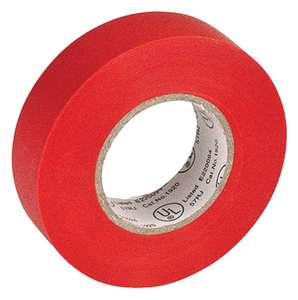
Red Duct Tape: a critical tool in
milk quality!
It's not uncommon for us to frequent area stores to purchase some interesting items to use on our dairy farm.  It's definitely fun to watch the eyes of cashiers as I check out large quantities of bleach, rubbing alcohol, and colored duct tape...red duct tape specifically.  This past week was like so many others.  I was on my way to town with my master list of things we needed at the farm and home.  So many errands to run, so little time.  So I scurried through the isles of our local Wal-Mart working my way down my list.  I'm a huge bargain hunter and coupon user, so I'm always distracted.  As I rushed to the check out I greeted my cashier and started unloading my cart.  This shopping trip was like so many others, the cashier's eyes got big as she scanned multiple gallons of bleach, bulk bundles of paper towels, several bottles of rubbing alcohol, and then she couldn't hold it in any longer...she scanned in my roll of red duct tape.
"Well, my goodness!  This is a "colorful" way to keep someone quiet!", she exclaimed.  "Haha! That's not exactly what I had intended for that red duct tape."   And then it hit me....a perfect opportunity to have a quick chat with this lovely lady about the importance of producing quality milk on our farm!!!!  I love it when these opportunities pop up, and I seldom walk away from a good chance for education...so I proceeded.
One strip of duct tape on both rear legs helps us recognize a
"treated cow" in the parlor, making sure our milk
is always perfect!
"You see, I'm a dairy farmer.  And that red duct tape is the perfect tool for marking my cows' legs.  When we have a cow that is sick and needs to be treated with antibiotics we automatically place a strip of this red duct tape on each of her rear legs.  This allows us to see her quickly, recognize her, and make sure that we milk her separately from the other cows.  Antibiotics are not allowed in milk for sale, so we work hard to make sure that our milk is always perfect, and if it's not perfect, we pitch it.  If we "accidentally" get antibiotics in our tank, the consequences are very severe...so this red duct tape has a VERY important job on our farm!" 
"Wow, I never knew that dairy farmers had to keep antibiotics out of milk.  I guess I just assumed it was all mixed together!" she shared with me.  How many other consumers shared her thoughts.  No one had ever explained to this kind lady how dairy farmers are tested multiple times each pick for antibiotics.  Food safety comes first, and we take our responsibilities very seriously.  We continued to have a great conversation as the cashier check out the last of my items.  That day I left the store having shared with a nice woman, the importance of milk quality and antibiotics on our dairy farm....and that was time well spent!

Monday, September 5, 2011

So what's an Animal Unit???


This awesome cow is actually 1.4 Animal Units!
Read more on how we determine how many
animal units we have on our farm!

  As of recently Jon and I have been working diligently on our farm project.  As part of that project we are also renewing our conditional use permit for our dairy.  A conditional use permit is issued to livestock farms in our county to allow them to have and raise livestock on their property.  Yes, livestock is not a right, it is a privilege.  As part of this process, Jon has been making many visits with the area neighbors to discuss the changes we want to make to our farm and how they might affect the neighbors.  All of our changes are for the good of our neighbors, our farm, and most of all for the well being of our cows.  Also part of the process includes a listing in area newpapers of our application for this permit...and that's where the controversy lies.  We are currently over our previous permit of 299 animal units.  We are applying for a permit for 840 animal units, which is actually for 100+ more cows than we have now, but we are planning for the future, 5 or 10 years down the road.  This number of 840 has a lot of people talking!  So let's start at the beginning....

Wikipedia defines an animal unit (AU) as "a standardized measure of animals used for various agricultural purposes.A 1,000-pound beef cow is the standard measure of an animal unit. The dry matter forage requirement of one animal unit is 26 pounds per day. Animal unit equivalents (AUE) are calculated for various other animals."  At 840 animals, we are calculating each cow to be 1.4 animals units!  That's right, those cows are the largest AUE possible!  Even horses are only 1.3 AUE and beef cattle are only 1 AUE!  Now, if we have 2 herds of cows, one with about 100 and the other with 200...than at my calculation, we have 420 AUE in just the lactating cows!  Now figure that a cow has 1 calf each year, and half of those are usually bull calves, which are sold.....and we are talking at least another 300 head of heifers and calves...also to be included in the final AUE count.  Now, adding calves and heifers, we are almost to 650 AUE.  The extra 200 AUE accounts for any additional cows we add in the years to come.  To see the worksheet we used to do our math, check this out!

Seems scary at first to see such large numbers, but if you take some time to really analyze what these numbers actually stand for, it makes perfect sense!  Hopefully this clears the air on what an "animal unit" actually is!

Saturday, August 27, 2011

God Bless Good Neighbors!

Not enough can be said about having good neighbors.  So often in the "rural" areas, we depend on good neighbors.  It's so much more than walking over to borrow a cup of sugar or glass of milk....it's depending on them when you're really in a pinch.  I can't count the number of times we've helped pull a neighbor out of a snow bank, helped chased cows back into their yards, or helped fix a flat tire.  The best part....is that our great neighbors repay those same favors back! 

On Wednesday, Jon was working diligently to finish the last of our 4th cutting of alfalfa.  We had some much needed rain on Monday night/Tuesday morning which delayed harvest.  I needed to leave to the MN State Fair on Wednesday, so Jon was working solo, with help from some of those great neighbors (and family too!)  Wouldn't you know it! Right before I was about to leave, I got a call!  Jon, "Do you have Greg's number?" Me, "Yeah, why???" Jon, "We've got a problem, that chain I was going to fix when we finished alfalfa broke and we only have 4 hours of chopping left" Me, "Hold on, I'll get it"  Minutes later, Jon goes flying by on the 4-wheeler, headed to Greg's place.  Turns out our good neighbor Greg had a spare part that we needed to fix our silage bagger!  Lucky for us, he was willing to let us have it, and replace it later.  Without Greg's help our alfalfa would have become too dry for silage before we could have drove 1.5 hours to get the replacement part.  We are definitely grateful for Greg's help and more than willing to pay him back!

The other "neighbor" issue on our farm is also a good one!  As we have been working on the next step for our dairy farm, we have also been working on renewing our permits to have dairy cows.  Yep, you got it!  We have to apply for a permit to have cows on our farm.   It's not a right to have cows, it's a privilege!  Part of the permitting process is to go to each of our neighbors to notify them of our plans and of the public county meeting, where we will find out if our permits will be approved.  The great part about notifying our neighbors, is that it gives us another opportunity to talk to them about what's going on at our farm.  Jon's been especially enjoying the conversations about how we care for our cows.  We know living next to a dairy farm isn't always glamorous.  Our cows make manure, and manure stinks.  We try to be conscientious of when we haul manure and where we haul it.  We also know that when we are in the middle of harvest, our tractors tend to make a lot of dust on the roads.  We are SO GRATEFUL for understanding neighbors!  How great it is to talk to them about improvements we want to make to be a more "neighbor-friendly" dairy farm!  We also make sure that all neighbors know we have an "open door" policy.  Any time our neighbors might want to stop for a visit or stop to talk about a concern...the door is always open!  We value our neighbors, and want to make sure that they can value us as well!  God Bless all of our Good Neighbors!