There has been much discussion lately about various pulls from consumers for "antibiotic-free", "rBST-free", "GMO-free", and whatever kind of "-free" you can come up with. Whether grounded in science or not, these demands from consumers are becoming increasingly louder and more prevalent. If you ask me, it is the result of social media and companies capitalizing on fear marketing, but my opinion doesn't matter, at least not yet. I have had several conversations with various farmers over the past few weeks that are facing some serious demands by the processors that they sell their milk to. While most processing companies are dairy farmer owned and a board of dairy farmers serve and lead those companies, consumers and marketing are now in the driver's seat for the products and quality that farmers must produce. Rather than premiums being paid for higher quality products dairy farmers are being asked to make changes on their farms or be forced to take a penalty for their milk. Let me provide a couple "real life" examples of the costs that a dairy farmer faces with these challenges.
One cooperative is forcing its farmers to produce milk with lower bacteria counts and not use any chemicals or cleaners on farm that contain a certain chemical in order to meet the demands of their foreign export markets. In order to avoid this chemical, dairy farmers now have to buy more expensive cleaners from a smaller pool of possible choices. In order to lower their bacteria counts, milking equipment has been upgraded, which is also expensive. Those dairy farmers do not see a pay increase for their milk, it is just another hoop that they jump through in order to have a market to sell milk to. Is that the price they pay to have a market to sell to? It appears that way. Were these changes good for the farmer? Most were, but they were expensive at a time when milk prices are low. Did the farmer get paid more for their milk because of the benchmarks met? No. Most people resist change, dairy farmers are no different, but the milk produced from these farms is no safer than the milk they produced last year, before these changes. They just jumped through another hoop, spent some more money and didn't get paid any more for their efforts, however they did appease the standards to ship dairy products abroad.
Another couple of cooperatives are discussing only buying milk from dairy farms that do not use rBST (recombinant bovine somatotropin). In several states already (Michigan for example) this is already commonplace. rBST is a growth hormone used to increase metabolism activity and feed efficiency in dairy cows. rBST has decades of research proving that there is no difference between milk that comes from a treated cow and milk from a non-treated cow, however there is an implied understanding from consumers that any added hormones are bad. I will note that as a dairywoman I did not use rBST and found I was better off without it BUT I do see a place for it on our farms. I see where it can help a farmer keep a cow healthy and productive. I also see where it helps a farmer be more efficient converting feed into milk (which is really good for our environment!). rBST is another tool that is available to dairy farmers to help them do what's best for their cows, their families and their resources. Eliminating rBST from the toolbox is fine but again there is no premium paid to the dairy farmers for having one less tool to use. Instead these farmers will have to spend money increasing their management and care of their cows to hopefully recoup the lost milk production and efficiency. These farmers will also potentially have to sell cows for slaughter that they would have been able to keep with the aid of rBST. I know with the advancement of management skills and facilities rBST is becoming increasingly outdated, but to completely remove it from the toolbox does have me concerned. Yet another hoop to be jumped through with no premium paid to the dairy farmer to make those changes. Farmers are forced to keep swallowing the costs instead.
My proposal: let's meet in the middle. Consumers have concerns and dairy farmers have costs to make those changes. Admittedly some dairy farmers won't change, there's always someone like that. I know as a dairy farmer I would have no problem meeting those demands as long as we can reach agreements that make sense for everyone involved. I want a future market for milk because I want another generation of dairy farmers. I want to be able to send our dairy products to foreign countries and reach consumers who have never had dairy products before. But I also want changes in standards and benchmarks to make sense for the dairy farm families involved. Right now, with record low milk prices yet again, these challenges are a hard sell to farmers. Consumers want transparency and believe it or not dairy farmers want to give that transparency. We're proud of what we do every day and we love the milk that we produce and the cows that we care for. Just ask us!! Instead of battling each other over the "-free's" let's have a conversation, respect each other, and meet in the middle for what makes sense for everyone involved!
Showing posts with label food safety. Show all posts
Showing posts with label food safety. Show all posts
Wednesday, August 10, 2016

Wednesday, September 21, 2011
Red Duct Tape and a Story about Milk Quality...
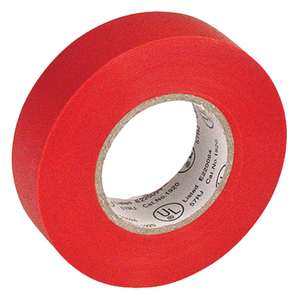 |
| Red Duct Tape: a critical tool in milk quality! |
It's not uncommon for us to frequent area stores to purchase some interesting items to use on our dairy farm. It's definitely fun to watch the eyes of cashiers as I check out large quantities of bleach, rubbing alcohol, and colored duct tape...red duct tape specifically. This past week was like so many others. I was on my way to town with my master list of things we needed at the farm and home. So many errands to run, so little time. So I scurried through the isles of our local Wal-Mart working my way down my list. I'm a huge bargain hunter and coupon user, so I'm always distracted. As I rushed to the check out I greeted my cashier and started unloading my cart. This shopping trip was like so many others, the cashier's eyes got big as she scanned multiple gallons of bleach, bulk bundles of paper towels, several bottles of rubbing alcohol, and then she couldn't hold it in any longer...she scanned in my roll of red duct tape.
"Well, my goodness! This is a "colorful" way to keep someone quiet!", she exclaimed. "Haha! That's not exactly what I had intended for that red duct tape." And then it hit me....a perfect opportunity to have a quick chat with this lovely lady about the importance of producing quality milk on our farm!!!! I love it when these opportunities pop up, and I seldom walk away from a good chance for education...so I proceeded.
"Well, my goodness! This is a "colorful" way to keep someone quiet!", she exclaimed. "Haha! That's not exactly what I had intended for that red duct tape." And then it hit me....a perfect opportunity to have a quick chat with this lovely lady about the importance of producing quality milk on our farm!!!! I love it when these opportunities pop up, and I seldom walk away from a good chance for education...so I proceeded.
 |
| One strip of duct tape on both rear legs helps us recognize a "treated cow" in the parlor, making sure our milk is always perfect! |
"You see, I'm a dairy farmer. And that red duct tape is the perfect tool for marking my cows' legs. When we have a cow that is sick and needs to be treated with antibiotics we automatically place a strip of this red duct tape on each of her rear legs. This allows us to see her quickly, recognize her, and make sure that we milk her separately from the other cows. Antibiotics are not allowed in milk for sale, so we work hard to make sure that our milk is always perfect, and if it's not perfect, we pitch it. If we "accidentally" get antibiotics in our tank, the consequences are very severe...so this red duct tape has a VERY important job on our farm!"
"Wow, I never knew that dairy farmers had to keep antibiotics out of milk. I guess I just assumed it was all mixed together!" she shared with me. How many other consumers shared her thoughts. No one had ever explained to this kind lady how dairy farmers are tested multiple times each pick for antibiotics. Food safety comes first, and we take our responsibilities very seriously. We continued to have a great conversation as the cashier check out the last of my items. That day I left the store having shared with a nice woman, the importance of milk quality and antibiotics on our dairy farm....and that was time well spent!
Wednesday, May 18, 2011
Wordless Wednesday: Antibiotic Tests
 |
| Did you know dairy farms test for antibiotics on farm? Shown here are 2 samples from 2 cows in our herd. The yellow sample is a cow that is negative for antibiotics, and will return to the milking herd, producing milk for consumers. The purple sample is a cow that tested positive for antibiotics and will NOT return to the milking herd. She will remain in the sick cow pen, where her milk is dumped and NEVER used for human consumption! Milk is tested 17 times before it reaches the consumers! |
Thursday, June 10, 2010
Raw Milk: Drink at Your Own Risk
Before I go into this topic, I think I should give a little background about myself. I was raised on raw milk. In fact I was known for bringing raw milk from the farm to college for my first year there. I had a difficult time adapting to milk that was not as thick or creamy as raw milk. BUT, I did in fact adapt to drinking pasteurized milk and drink about 1-1.5 gallons each week. I can also confess that I do occasionally drink raw milk from our own tank at our farm, but I really don't need over 3.5% fat milk, but I would prefer 1% fat for my health. The reason while I feel safe drinking milk from my own tank is that I live and work in the same environment as my cows. I am exposed to the same bacteria, good or bad, as my cows. I believe that this exposure makes it possible to drink my raw milk without incident of illness, however I would NEVER serve my milk to someone not from my farm. I believe that they should be drinking pasteurized milk. When I drink raw milk I take a risk, there is probably a one in a million chance that I could get a bacteria that would harm me. BUT I would never allow another to take that risk, pasteurization is insurance that harmful bacteria are not present in our precious milk. There is no proven health difference between pasteurized and raw milks. Safety first. We don't eat meat without cooking it completely, or fruits and vegetables without washing them, why would we drink milk without pasteurization?
Recently a dairy farmer in Minnesota was associated with an e-coli breakout, resulting in 5 ill children, 3 of which were hospitalized. This farmer was selling his milk to many families, some with children who are most at risk for illness. Today, this farmer had a press release where he denounced his link to this outbreak, even though Minnesota Department of Health Officials have found e-coli on the farm and in a sample of cheese from the farm. I am sure this farmer never intended for others to get ill, but the fact is that someone did. Raw milk consumption is dangerous. Midwest Dairy Association has an excellent link describing why raw milk is dangerous. Also a great resource is the FoodSafety web site by the USDA, which highlights myths about raw milk that are false. Claims that raw milk will reduce lactose allergies, help fight pathogens, or help digestive disorders are all false.
So if you drink raw milk, please consider pasteurization for your safety...whether organic or conventional milk, just make sure it is pasteurized for your safety.
Wednesday, May 12, 2010
Kids Ask, I Tell...Part 2
Highlighting more great questions from the tours last week, here's a couple more!
3. How come the calves sleep alone in the calf huts? Where's their mommies?
Great question! Calves are moved to calf huts within hours of birth. We house our calves in huts, as we do not have an adequate calf barn. These huts allow us to house our calves individually, protecting them from germs from other calves (like kids in kindergarten). They are able to stay healthy in these environments. It may seem lonely, but calves and peak outside their huts and see herd mates down the row. Each of these huts work like individual "bedrooms" for the calves, where they enjoy space to run around and plenty of soft and dry bedding. Their mommies, the cows are in the milking barn, where we are able to better care for our cows. We can focus on giving these cows the nutrition and care that they need after having a calf, instead of the cow worrying about the newborn calf.
4. Can you drink the milk fresh from the cows?
Well, that's a good question too. And yes you could drink the milk fresh from a cow, but it would be very warm, about 100 degrees. It would also be very thick-as most cow's milk has a higher butterfat content that that milk that we buy in the store. Also, milk from cows should always be pasteurized before people can drink it. Milk that is pasteurized is guaranteed to be free of disease causing bacteria. Bacteria is everywhere in food production, pasteurization allows us to insure that those bacteria (good or bad) are not present. I don't know about you, but I would like to drink milk that is cold and free of bacteria.
More fun questions to come tomorrow~!
Wednesday, April 28, 2010
Passed the milk inspection!!!
Well, the milk inspector stopped out today for our surprise inspection and we are certified to sell milk for another 6 months!!!! We were not worried that we would fail this inspection, as we are always working to have clean equipment and safe, wholesome milk, but every dairy farmer knows that the moment that the milk inspector sets foot on the farm....you just get nervous. It's a guessing game as to whether or not we will get a violation, and we definitely do not want to have a violation so severe that it would warrent a re-inspection, which we would have to pay a fine for. Today's good news was that we passed...but Alan did leave us a short list of changes that he thinks we should make before he comes to visit us again in the fall. Simples stuff like painting a storage box, scrubbing off some hard water spots off of the pipeline in the corner of the parlor, and making sure the milk house door is shut~as Alan showed up when we were cleaning up after treating a cow and we had the door propped open. It's not that an open door or a storage container with chipping paint are bad for the quality of our milk, but its that if we make these improvements we will continue to have a clean and safe environment to make safe and wholesome milk. Sometimes it just nice to have another set of eyes to check out the job that you are doing. In case you're wondering what a milk inspection looks like, check out this video from the Minnesota Department of Ag....and check out this video from http://www.dairyfarmingtoday.org/ about milk quality!
Just a note, I might not be around much in the coming days. We have a tour group of preschoolers coming to the farm next Monday, and I have a lot of activities to organize beforehand. Since the sun is shining Jon tells me that we will also be hauling out the dry cow yard's manure and hopefully hitting the fields to plant our first field of corn for silage! I promise to take lots of pictures in the meantime! Happy Spring!
Thursday, February 4, 2010
Quality Comes First!
Last week, when we received our monthly advance check (about 1/3 of our monthly milk sales) from our cooperative, we also received a letter from the general manager of our creamery. Upon reading this letter, I was even more confident in our choice to sell our milk to our creamery. We ship our milk to First District Association, Litchfield MN. FDA makes so many great products. Cheese is their primary product, but FDA also ships numerous pounds of dry milk and milk protein products. We have great pride in FDA products and what FDA does for their patrons (us). Because FDA markets these products, some of which are exported, we are held to higher standards of quality. The letter I read re-enforced this concept, in addition to encouraging further improvements in quality.
Quality in milk is measured by using a couple different counts. One count is a common bacteria count which tells us how clean the milk is, and the equipment that the milk flows through. The lower the count, the better the milk and the higher level of cleanliness of the equipment that handles the milk. 100,000 is the Federal limit for this count, over that number and you cannot sell your milk for consumption. At Orange Patch Dairy, we commonly have bacteria counts at about 5,000. This is a very low number, and we are very proud to be able to maintain that. It means that our cows are healthy and our equipment is clean.
We also use SCC (somatic cell count) as a measure of quality and cow health. SCC is a measurement of the number of white blood cells that are in milk. Because milk is made in a mammal, it is normal to have some white blood cells, however higher levels of SCC indicate cow health issues. The federal government regulates this measure as well. SCC's over 750,000 make milk illegal for comsumption. At Orange Patch Dairy, we strive to keep our SCC below 200,000 everyday. For the month of January, we averaged about 145,000. We use procedures while milking to insure healthy udders, maintain our equipment, and house our cows in a clean environment.
Our cooperative, FDA, rewards us for good quality milk by paying us a premium. The letter we received announced that FDA will further reward dairy farmers that strive to increase the quality of the milk that they produced. FDA also announced that they put into place penalties (financial fines) for dairy farmers that do not comply with the new regulations. Penalties for milk start at 300,000 SCC, a level much lower than the federal level, but a level that is more acceptable to the customers that FDA exports to. We support this decision to increase milk quality, consumers demand it and it's a change that's worth making.
Healthy and happy cows make safe wholesome, and nutritious milk, and that's a concept we can all support!
Tuesday, October 13, 2009
Larry King Show Response
Tonight I watched Larry King's show. I usually don't watch Larry's show, I am just not an interested fan, but a friend told me tonight I had better tune in, so I did....the topic tonight, the meat industry and whether or not meat is safe to have in our diets.
Hmm, interesting....the debate was interesting and frustrating at the same time.
My response: YES! Meat is part of a balanced diet! Beef, pork, poultry, eggs and fish all provide vital nutrients that are critical to a healthy body. Meat products in the USA are safe. Just remember to cook your meats to the correct temperature and prepare properly. Also remember it's not okay to eat meat in excess, but of course in appropriate sizes and in moderation-perhaps 2-3 meals a day including some lean cuts of meats. I hope the general public also believes this fact.
Subscribe to:
Posts (Atom)