Showing posts with label dairy farming. Show all posts

Tuesday, January 24, 2017

It isn't "Big Milk's" Fault, it's the "Big Picture"

NPR posted an article 2 weeks ago "As Big Milk moves in, Family-Owned U.S. Dairy Farms Rapidly Fold." This article highlighted a Vermont dairy farmer who was selling his cows, exiting the industry like so many other farms in the country.  The article goes onto to describe from the farmer's perspective that large dairies are producing more milk, more economically and forcing smaller family farms out of business.  It took me some time to come up with an adequate response to this article because my first reaction was a heart wrenching, blood boiling one.  "Big milk" isn't the issue in this story, it is more of a "Big picture" issue for U.S. dairy farmers, no matter the size or scale. 

It's no secret that dairy farming is a capital intense industry but what does that REALLY mean?  It means that in order to produce any amount of milk, there are so many large and expensive purchases that need to be made.  Everything from cows that cost $1500 or more each to vacuum pumps that make it possible to milk cows and move milk to the cooling tanks that cost over $5000.  Add a new barn for 150 cows that might cost over $400,000 and a parlor that is also $400,000.  These prices aren't top of the line either.  If a dairyman wants to add technology to his farm, those prices go even higher.   To try to control these costs, often, brothers, sisters, parents, cousins, uncles, and grandparents are joining to form farm family companies.  This means that the over all cost of the farm can be spread over more family members and allows for younger family members to have a chance to farm like their elders.  97% of all dairy farms are family own and operated. 

Another way to stay in the business is diversification.  Many dairy farmers have a spouse that has an off farm job that pays for family expenses and health insurance.  Some dairies are diversifying into producing other agricultural products like beef, sheep, and pigs.  Maybe those farms are making their own cheese and yogurt.   I know locally many farmers that are raising vegetable crops to make extra income to survive.  Many others are capitalizing on markets for organic milk, noting that all milk is milk, safe and nutritious but that there are consumers willing to pay more money for organic milk and these farmers are willing and able to produce it. 

Dairy farming is very difficult to start and it is even harder to continue doing, especially with the volatile milk prices and consumers that are demanding more from already stressed farmers.   Consumers demands are a good thing in most cases, encouraging sustainable practices and improved efficiencies but these demands often come in the form of expensive regulations that make paper work a full time job for most dairy farmers.  Innovation is expensive and often in order to implement innovations a dairy farmer will have to increase his milk production either through adding more cows and/or increasing the amount of milk produced per cow.  The great news is that dairy farmers are producing more milk with less resources, leaving a smaller carbon footprint than our predecessors but this increased milk is also keeping milk prices low. 

Another factor is that the average American is falling short on getting their 3 servings of dairy each day and we are also seeing continued decreasing in consumption of fluid good old fashion white milk.  Truth is that consumers are no longer having meals as families and as a result they are not drinking milk with their dinners but soft drinks and water instead.  If each American had 3 servings of dairy the impact on family dairy farmers would be huge!  So the question becomes, as a consumer, what can you do to save these family dairy farmers???
  • Drink Milk! 3 servings each day for your health! It's local, traveling within a 200 mile radius of the store you buy it at and from cow to table in 48 hours!
  • Understand the issues of sustainability and environment that face farmers.  In order to achieve these goals there has to be extra income to pay for these innovations and that income usually comes in the form of more milk. 
  • Understand that technology that makes the quality of life better for a dairy farmer costs a lot of money and that makes it very difficult for smaller farmers to add technology to their farms.
  • Advocate for your local farmers by telling your friends about how great and local milk is!  It takes all sizes of farms to feed the world, we need all farms!
  • Understand that multi-generational farms allow for small farms to be packed into larger farms, which provides technology and innovation.   We're doing more with less!
  • Spread the word that all farms are reducing their carbon footprint and making a real impact on the environment, which is good for everyone!!!
It's not "big milk" as much as it is the "big picture" so pour and glass of cold milk and support your local dairy farmers!!!  Help keep them in business for their next generations of dairy farmers!

Wednesday, August 10, 2016

Battle of the "-free's"

There has been much discussion lately about various pulls from consumers for "antibiotic-free", "rBST-free", "GMO-free", and whatever kind of "-free" you can come up with.  Whether grounded in science or not, these demands from consumers are becoming increasingly louder and more prevalent.  If you ask me, it is the result of social media and companies capitalizing on fear marketing, but my opinion doesn't matter, at least not yet.  I have had several conversations with various farmers over the past few weeks that are facing some serious demands by the processors that they sell their milk to.  While most processing companies are dairy farmer owned and a board of dairy farmers serve and lead those companies, consumers and marketing are now in the driver's seat for the products and quality that farmers must produce.  Rather than premiums being paid for higher quality products dairy farmers are being asked to make changes on their farms or be forced to take a penalty for their milk.  Let me provide a couple "real life" examples of the costs that a dairy farmer faces with these challenges.

One cooperative is forcing its farmers to produce milk with lower bacteria counts and not use any chemicals or cleaners on farm that contain a certain chemical in order to meet the demands of their foreign export markets.  In order to avoid this chemical, dairy farmers now have to buy more expensive cleaners from a smaller pool of possible choices.  In order to lower their bacteria counts, milking equipment has been upgraded, which is also expensive.  Those dairy farmers do not see a pay increase for their milk, it is just another hoop that they jump through in order to have a market to sell milk to.  Is that the price they pay to have a market to sell to? It appears that way.  Were these changes good for the farmer?  Most were, but they were expensive at a time when milk prices are low.  Did the farmer get paid more for their milk because of the benchmarks met? No.  Most people resist change, dairy farmers are no different, but the milk produced from these farms is no safer than the milk they produced last year, before these changes.  They just jumped through another hoop, spent some more money and didn't get paid any more for their efforts, however they did appease the standards to ship dairy products abroad.

Another couple of cooperatives are discussing only buying milk from dairy farms that do not use rBST (recombinant bovine somatotropin).  In several states already (Michigan for example) this is already commonplace.  rBST is a growth hormone used to increase metabolism activity and feed efficiency in dairy cows.  rBST has decades of research proving that there is no difference between milk that comes from a treated cow and milk from a non-treated cow, however there is an implied understanding from consumers that any added hormones are bad.  I will note that as a dairywoman I did not use rBST and found I was better off without it BUT I do see a place for it on our farms.  I see where it can help a farmer keep a cow healthy and productive.  I also see where it helps a farmer be more efficient converting feed into milk (which is really good for our environment!).  rBST is another tool that is available to dairy farmers to help them do what's best for their cows, their families and their resources.  Eliminating rBST from the toolbox is fine but again there is no premium paid to the dairy farmers for having one less tool to use.  Instead these farmers will have to spend money increasing their management and care of their cows to hopefully recoup the lost milk production and efficiency.  These farmers will also potentially have to sell cows for slaughter that they would have been able to keep with the aid of rBST.  I know with the advancement of management skills and facilities rBST is becoming increasingly outdated, but to completely remove it from the toolbox does have me concerned.  Yet another hoop to be jumped through with no premium paid to the dairy farmer to make those changes.  Farmers are forced to keep swallowing the costs instead. 

My proposal: let's meet in the middle.  Consumers have concerns and dairy farmers have costs to make those changes.  Admittedly some dairy farmers won't change, there's always someone like that.  I know as a dairy farmer I would have no problem meeting those demands as long as we can reach agreements that make sense for everyone involved.  I want a future market for milk because I want another generation of dairy farmers. I want to be able to send our dairy products to foreign countries and reach consumers who have never had dairy products before.  But I also want changes in standards and benchmarks to make sense for the dairy farm families involved.  Right now, with record low milk prices yet again, these challenges are a hard sell to farmers.  Consumers want transparency and believe it or not dairy farmers want to give that transparency.  We're proud of what we do every day and we love the milk that we produce and the cows that we care for.  Just ask us!!  Instead of battling each other over the "-free's"  let's have a conversation, respect each other, and meet in the middle for what makes sense for everyone involved!

Thursday, May 19, 2016

Dropping Milk Prices, Emotional Stress


If you don’t know by now, consider this your notice, milk prices on-farm have been dropping for months and currently are at the lowest point they have been in almost 7 years.  The last time financial impacts like this hit the dairy community there was a mass exodus of producers, many of which wish they didn’t have to sell their cows but they couldn’t provide for their families anymore.  This is our current reality.  Today I read articles about record cheese inventories in the United States putting pressure on milk price to drop even lower.  I heard from fellow dairy farmers that the exodus has started again, dairy farmers are being forced to sell their herds and even land in order to pay off debt and save themselves.  This dip in prices will have long lasting effects on the dairy community, no matter the size of the farm.  It does not discriminate.  So as a reader, why should you care?  What is my purpose in sharing this with you? 
These dairy farmers work tirelessly for their families, their cows, their farms, and yes you the consumers.  They are experiencing emotional stress that you can’t even describe.  These dedicated farmers wake up every morning fully aware that they are literally paying admission to milk their cows.  They are not receiving income from their farms, but paying just to keep them.    Many farms are accumulating thousands and even millions of dollars of debt just to feed and care for their cows.   But it isn’t the financial situation that concerns me the most.  What concerns me the most is the emotional and mental health of these amazing people.
These men and women will most likely sacrifice everything they have to give to keep doing the one thing they know and love, milking cows.  I talked to a dear friend in Ohio who has a small herd.  He told me he will farm until he’s completely broke and go to a food bank for himself and his wife before he sacrifices his cows.   That’s right, he would sacrifice for his family before he would sacrifice for his cows.  He’s not alone, I know many just like him.  I know of farmers trying to make cuts to the budget, but they refuse to compromise their soil, water, and cows’ well-being.  These passionate men and women believe in a hope that is impossible to describe, because many believe if they keep pushing forward through the hard times that good times will soon follow.  Their perseverance pushes them to keeps them fighting for their calling.   Crops were planting this spring and hay is being harvested, farmers’ optimism continues, but at what price?  I can see the stress on their tired faces.  The worry is in their eyes: how will they feed and clothe their families, how will they pay even part of their monthly bills, how long will this last and can they make it that long? 
What can you do to help farmers?  Keep drinking milk, eating cheese and enjoying yogurt.  Dairy foods are some of the most local foods we have available, with the average gallon of milk traveling no more than 100 miles to the grocery store from the nearest dairy farm.  By drinking milk, you are helping your neighboring dairy farmers.  Please help these amazing farmers provide for their families and yours, by doing something as simple as making sure you and your family enjoys 3 servings of dairy each day.  And while you’re at it, please pray for these hard working heroes, they need all the love and support they can get!  Thank you!

Friday, February 26, 2016

The Bad Asses of Farming


“People who wade into discomfort and vulnerability and tell the truth about their stories are the real bad asses”  Brene Brown, Rising Strong.   I love this quote.  I just finished this book and I love it!  This quote has got me thinking about all the bas asses I know, especially right now in farming. 

Milk prices are low, crop prices are low, and farmers are facing difficult financial times, yet again.  Seems like we “just” went through a rough patch not that long ago, basically every 3 years.  Traditionally, farmers have generations of history proving their stoic personalities.  During the Great Depression, the Farming Crisis of the 1980’s, every drought or flood, and every time the prices come down there are proud stories about how farmers tightened their boot straps once again and made it through.  As a group, farmers will be proud of how they made it through times like this, but I think they’re missing a key part of their successes.  What about the suffering and failure?  I see it happening more often, but maybe not enough: farmers being honest with themselves and others about how difficult times like now can be.  I’m not even talking about the financial woes or making the hard decisions about what is getting cut out of the budget.  I am referring to the emotional, physical, psychological, and mental stress that happens to these farm families during times like this.  I don’t think enough of us are honest about what other issues come from this intense stress and anxiety.  But to the bad asses that are honest, God bless you! 

I am blessed to have groups of great farming friends where we have a safe place to talk about the stress.  It is in these safe places that the real bad asses of farming are born.  Here, farmers, male and female alike, share their stories about how they worry.   Will they have enough money to take care of their families?  Will they have enough money to pay their employees fairly? Which employees will they have to lay-off in order to keep afloat and how will those employees’ families handle that?  Can they handle the financial stress of another expensive repair bill on a critical piece of equipment (tractor, mixer, etc.)?  How far will they fall behind on their farm payments?  They are forced to work harder and longer: who will suffer more their spouse or their children?  Can they find time to take care of themselves?  How will they find time to stay active or eat health meals?  Can they even talk to their non-farm friends about how they feel right now?  Will we continue to have a place to sell our milk and crops to?  What if consumers ask more from me and I can’t afford to make those changes? Can I pass my farm onto my sons or daughters, and if I can do I even want to?

These are heavy topics, with real and intense emotions.  Low prices are so much more than financial issues.  Low prices are just the start of a lot real problems that farm families face.  To the bad asses I know right now that are digging deep and being honest about how they feel: YOU ROCK!  God bless you for sharing your struggles and fears with us, with the consumer, and with yourselves.  You are showing so much courage in your vulnerability!  To those of you too scared to talk about it, please find a trusted friend or peer that you can vent to.  It is not healthy to keep this stuff in.  Be a bad ass and talk about your struggles and fears.  We might not be able to fix our pricing issues just yet, but we can at least know we don’t have to wade through these murky waters alone.  Stand tall! I’m cheering for you!    

Thursday, March 5, 2015

Passion & Purpose

Passion. I have a great passion for everything dairy.  Passion was a word that I only started to understand when I was a 16 year old dairy ambassador and even at 32, I still don’t understand passion in its fullest form but I live passionately every day of my life.  The past year has been a challenge that I never saw coming and I definitely didn’t know if I could and how I would handle it (someday when I am strong enough I may blog about it).  The challenge shook me to my core and made me truly reflect on what I am passionate and how I can make sure that I am living that passion every day.  I grew up on a farm, I lived on a farm and in a heartbeat I would trade my best day of work for my worst day of farming.  Even though some days where emotionally heart breaking, physically exhausting and mentally difficult, I will farm again, I have to farm.  Farming is my passion.

I get tears in my eyes thinking about all that love about farming.  I love the joy of growing food, raising animals for food and watching people grow in their jobs, when they truly “get” the importance of feeding the world.  I love watching things grow!   I believe farming is one of few occupations which allows a deep connection to nature and God.  Farmers are constantly at the mercy of Mother Nature and they are persistently praying.  They pray for rain, sun, cows, calves, pigs, sheep, chickens…and most of all they pray for their families.  Most truly passionate farmers are also so selfless that they hardly ever pray for themselves. 

There is so much pride in producing food for the world.  At the grocery store I am so encouraged by the images of families buying dairy products or enjoying a dairy treat.  I am often thanking them for consuming our foods.  Dairy is such a healthy and filling food.  It’s safe, nutritious, and wholesome…and at the end of the day I am more than willing to eat and drink what comes off of my farm.  There is a lot of joy that comes with knowing that.  What I do as a farmer matters to those who consume my products, and in turn those who consume my products matter to me.  A dairyman I know, often said, “I want to be able to produce a product that a single parent household can afford to purchase and is an important part of a healthy diet”, I completely agree. 

I get excited when I meet a farmer that is also excited about farming and I try to encourage farmers who are feeling beaten down by their profession and calling. Farming is not for the weak, it is for the strong, but it is for those who are strong in their passion and dedication for agriculture.  Very few will know the pure joy of delivering a live calf, when it should’ve been dead.  Few will know the beauty of a sunrise in the morning on a day you will be making hay.  Few will know the sense of pride when you have a cow on your dairy who has lived to 12+ years old.  Few will enjoy sharing with someone with no connection to agriculture at all the passion and compassion that we have for what we do every day.  I love everything about dairying and farming.  It might sound completely nuts, but I love even the worst day on the farm, because at least I am still doing what I love, what I am passionate about.  Dairy farming is what brings tears to my eyes and a purpose and passion to my life.  These are my God given skills, and I intend on using them. 


Monday, September 29, 2014

The Importance of Listening..

I was scrolling through my comments for this blog for the past 2 years, then I read through some of my previous blog posts.  I started this blog with the intention of educating consumers about my love of dairy farming and the importance of agriculture and food.  As I was reading I could see my passion shine through, however I noticed a certain "defensive" tone to my writing.  Maybe it's age or maybe it's experience, but I think now I can see with greater clarity the importance of listening and that was very evident in the comments that I was reading.  Many of the comments that I read today were very angry and very inappropriate.  I stick firmly by my personal rules to not engage in conversation with those who cannot be polite and civil when expressing their opinions, but perhaps I was also guilty of jumping to some prejudgments and defending my opinion without actually listening to a differing opinion in it's entirety.  I also realize how important it is to agree to disagree.  I should make it completely known that I am not against Vegan diets, organic agriculture, or anything different than what happens on our farm.  I believe in the freedom of choice, I just hope that those choices are made with a full understanding of all of the facts. And the way we all get understanding is through listening...so maybe this blog's purpose is shift towards engaging in a productive conversation about practices on our farm and many other farms and how that impacts the diets of so many people.  The way that we can make this conversation is through active listening....so I'm listening, feel free to leave and comment and hopefully my readers will also listen too.

Friday, April 25, 2014

Milk Testing...If it's not perfect, we pitch it!

What's up with these things?  Little known fact....EVERY tank of milk that is shipped from US dairy farms is tested for antibiotics.  I bet you didn't know that each dairy farmer is required to keep ANY cows treated with antibiotics separate from the other cows that are not treated with antibiotics.  The milk from all treat cows is usually disposed of and does not enter the human food supply.  If it's not perfect, we pitch it, every time, everyday! So if we have a sick cow...and we treat her with antibiotics to help her heal and feel better, we first move her to a separate pen to assure that her milk will also be kept separate.  Secondly, she is marked with 2 red colored leg bands to let everyone on our dairy know that she is treated with antibiotics. 
When our cows finish their complete treatment, we then wait the recommended time, also called the withdrawal time.  This withdrawal time is determined by veterinarians.  We follow the directions for each antibiotic that we use and each of those antibiotics are prescribed to our cows.  Even though we know that we waited the required time of withdrawal we take precautions.  One of those precautions is that we collect a milk sample from each treated cow.  That individual sample is tested with an on-farm testing kit that we own.  The photo above is an example of 2 such samples.  The yellow sample is a cow that is negative for antibiotics however the purple colored sample is a positive cow.  Milk from the purple sample cow will continue to be discarded until her  sample test turns yellow in a few more days.  We take antibiotics very seriously.  They are an important tool to help us keep our cows healthy when they get sick, but we also know that it is critical that NO antibiotics enter the milk tank.  The safety of our milk is one of the most important goals on our farm.  Every employee is trained to know and understand this importance....so rest assured that every glass of milk you enjoy is safe, wholesome, and nutritious.....and also free of antibiotics!

Friday, August 17, 2012

Drought 2012: How it's affecting US Dairy Farmers

I'm hoping to share a more personal reflection of the Drought of 2012 on this blog in the coming weeks, but for now I have a great resource for you to check out!  Please check out www.dairygood.org for their latest article featuring perspectives from some great dairy farmers across the US.  The article Dairy Farmers Endure highlights a lot of the very same issues that we're facing on our own dairy farm.  Rising feed costs, the risk of not having enough forages on hand, and the stress of financial issues are all hot topics on our farm.  So, please take some time to read this great article!

Thursday, August 16, 2012

Teaching the importance of Consistancy

Note: I found this gem in my drafts, which I never posted, but I found it to be especially well written, I hope you enjoy!

In a previous post I commented on some of the changes that we were making on the farm. One of the first changes was hiring our first employees. For the first couple weeks, things went really well. Jon and I both reaped the advantages of having extra help on the farm, but not too long after that we started to have some problems with one of our employees.


Dairy farming is a 24-7 job. Cows are always producing milk, and need constant attention. Cows crave consistency. Cows do not like changes. Cows expect to be milked everyday, twice a day. One of our employees missed that point. This employee decided that it would be okay if he didn't come to work, not once, not twice, but three different times in the past weeks. When you depend on someone to be there, and they don't show up, it's a huge let down. But on a dairy farm it has long lasting implications...this week was proof of this. Not only was Monday a complete disaster (we basically got cows milked, fed and bedded, but that was it, no extra projects for us), but we also had a mismatched schedule for the rest of the week. For example, today, I dried off cows that should have been dried off on Monday.

It's been easy for us to teach the importance of being dependable, responsible, and consistent to our other employee, but for the other, it was more than a challenge. We knew we would be at risk for employees that just might not care as much as we do about our cows, but we didn't think we would face it so soon.

We love our cows, and we expect our employee to care for them as well. In fact, we also expect them to get to know them by their names and personalities. We have a book/manual about cow behavior, we ask them to read. We also expect our employees to understand how much not only us, but our cows, depend on them to show up to work on time and do a good job. Without good employees we would not be able to provide our cows the care that they deserve. Needless to say, our truant employee put in his notice yesterday, before we could formally let him go. Our lesson was learned, and we will continue to work harder to teach our employees the importance of their roles in food production and cow care!

Friday, November 4, 2011

Picking out the Right Color Carpet....

I'm sure many of you can relate to picking out the right color carpeting for a home, the colors of paint for the walls, the types of counter tops, and the new light fixtures.  Each of these major decisions holds importance in the overall theme of your home and the goals of your family.  Are you fun or formal?  Are you going to be worried about guests or kids?  I bet you believe designing a home is one of the hardest tasks you will do.  Now...imagine trying to plan our a barn for a herd of cows!!!!!  Sure it looks easy but I would bet that it's even harder than designing a home! 
We've been planning our new barn for the past 4 years, and it's taken multiple trips to many different farms, research into new technologies, and lots of paperwork to make this all possible.  Our decisions were so much more complicated that picking out the right color paint....well we had to do that as well (trying to match the original red of our 2005 barn).  Things we had to decide on....
  • What type and style of stalls we would have?
  • What type of bedding we would use?
  • How would be move and handle manure?
  • How would these changes impact overall cow comfort and health?
  • Are we able to better handle and care for cows?
  • Can we improve cow health and handling?
  • Is it safe for the people who care for our cows?
  • What's the environmental impact?
  • What technologies can we afford to make managing our cows easier?
  • What technologies can we afford to make our cows more comfortable?
  • What type of lighting will we have...is it energy efficient?
  • What type of ventilation will we have? Will it help our cows in July, in the heat?
  • Ultimately we asked......How can we make life better for our cows????
In the next few months I hope to blog more & post videos and pics to help explain all that is going  into our barn to make it a great place for cows....but for now, here's a sneak peak of a farm we visited in 2009 and 2010...and when we are done, our farm will look very similar!!!!!


Thursday, October 6, 2011

Jumping through Hoops

Well, it's been another series of crazy weeks for us at the farm.  Beside the usual hussel and bussel of fall field work and running a dairy farm...we've been working hard on pushing forward our fall project for our cows.  Since we are young, starting dairy farmers, we have limited resources to use as collateral for the bank.  As a solution to help us better our farm, our banker suggested working with a branch of the government to secure financing for the riskiest portion of our barn project.  Sounds like a good plan, BUT just when we thought we met the criteria of the government agency, we only learn we have more hoops to jump through.  First, it was the need of an appraisal of our current farm, then it was forms that we had signed in early September that were now outdated and needed to be resigned, and now we needed to get "official" quotes for ALL work scheduled to be done on our barn project!  Oh good grief! 
If you've ever built anything, you know timing is everything and the longer this process continues, the farther into the fall we get, thereby increasing the risk of...oh that dreaded "s" word, SNOW!  We desperately need to make these changes to our farm for the betterment of our cows, so we can only hope that we are done jumping through hoops~!

Wednesday, September 21, 2011

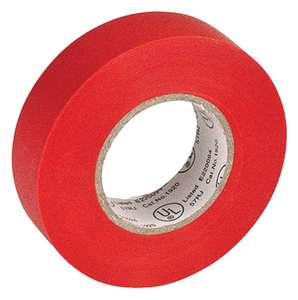
Red Duct Tape and a Story about Milk Quality...

Red Duct Tape: a critical tool in
milk quality!
It's not uncommon for us to frequent area stores to purchase some interesting items to use on our dairy farm.  It's definitely fun to watch the eyes of cashiers as I check out large quantities of bleach, rubbing alcohol, and colored duct tape...red duct tape specifically.  This past week was like so many others.  I was on my way to town with my master list of things we needed at the farm and home.  So many errands to run, so little time.  So I scurried through the isles of our local Wal-Mart working my way down my list.  I'm a huge bargain hunter and coupon user, so I'm always distracted.  As I rushed to the check out I greeted my cashier and started unloading my cart.  This shopping trip was like so many others, the cashier's eyes got big as she scanned multiple gallons of bleach, bulk bundles of paper towels, several bottles of rubbing alcohol, and then she couldn't hold it in any longer...she scanned in my roll of red duct tape.
"Well, my goodness!  This is a "colorful" way to keep someone quiet!", she exclaimed.  "Haha! That's not exactly what I had intended for that red duct tape."   And then it hit me....a perfect opportunity to have a quick chat with this lovely lady about the importance of producing quality milk on our farm!!!!  I love it when these opportunities pop up, and I seldom walk away from a good chance for education...so I proceeded.
One strip of duct tape on both rear legs helps us recognize a
"treated cow" in the parlor, making sure our milk
is always perfect!
"You see, I'm a dairy farmer.  And that red duct tape is the perfect tool for marking my cows' legs.  When we have a cow that is sick and needs to be treated with antibiotics we automatically place a strip of this red duct tape on each of her rear legs.  This allows us to see her quickly, recognize her, and make sure that we milk her separately from the other cows.  Antibiotics are not allowed in milk for sale, so we work hard to make sure that our milk is always perfect, and if it's not perfect, we pitch it.  If we "accidentally" get antibiotics in our tank, the consequences are very severe...so this red duct tape has a VERY important job on our farm!" 
"Wow, I never knew that dairy farmers had to keep antibiotics out of milk.  I guess I just assumed it was all mixed together!" she shared with me.  How many other consumers shared her thoughts.  No one had ever explained to this kind lady how dairy farmers are tested multiple times each pick for antibiotics.  Food safety comes first, and we take our responsibilities very seriously.  We continued to have a great conversation as the cashier check out the last of my items.  That day I left the store having shared with a nice woman, the importance of milk quality and antibiotics on our dairy farm....and that was time well spent!

Thursday, September 15, 2011

Following the Rules.....even though they make no sense

Well this week has been quite a week of roller coaster emotions!  Our week started out with a HUGE downer!  On Monday, Jon attended the County Board of Adjustment meeting, to present our plans for our new construction.  As part of that construction, we were hoping to build a lagoon (large lined storage area for manure) to store about 10 months of manure from our milking and dry cows.  The current county law states that farms (all livestock farms) over 300 Animal Units must have 12 months of manure storage if they choose to build manure storage.  Since we are over 300 Animal Units, we needed to appeal to the Board of Adjustment for a variance to allow us to have a smaller sized lagoon.  The reasons for the smaller size were many, the largest one is the fact that a small dairy of our size has a difficult time affording that much of an investment.  We also thought we could appeal to the board, since 10 months of storage is MORE than what we have currently, and would allow us go from weekly manure application to bi-yearly manure application (spring and fall applications).  Unfortunately, after a valiant fight from Jon, we were defeated, 3 votes to 2 votes.  Completely distraught, Jon called me.  "Now what?!?!" We were in despair!  This project was going to make the lives our cows more comfortable, as well as improving our own.  Now those plans came to a crashing halt!
Jon contacted our County Feedlot Inspector to see if we had indeed run out of options.  SUCCESS!  One small loop-hole was found.  If we agreed to build a lagoon for 12 months of manure storage in the next 3 years the County Planning and Zoning Committee would let us build our barn without the lagoon this fall.  Our manure would need to be hauled out to our fields, according to our manure management plan, on a daily basis.  This alone makes no sense to us.  We would have thought it would be better to have 10 months of manure storage, rather than none at all, but apparently our county's law doesn't read that way.  The reasons the Board of Adjustment gave were valid, but we do believe we addressed them.
The Board's primary concern was making sure to not set a precedent for others to come before the board.  We were the first to try for a variance on this law, and it looks like we might be the last.  The other concerns included hazards from hauling manure on county and township roads in the spring and risks of overflowing the lagoon.  Ironically, even though the Board of Adjustment believed we were a risk; neighbors, friends, fellow dairymen, and our suppliers have all expressed support for our previous plans.  It was really touching to have a visit yesterday with our dairy equipment dealer, who stopped specifically to see if there was anything he could do to help us with our hurdle.
So, for now, we have officially finished the financial paperwork for the project, changed and amended the permit applications, and are patiently waiting for next week and we find out if the County Board of Commissioners will give the "go ahead" in addition to the bankers.  So...we wait, hoping for good news instead of roller coasters!

Monday, September 5, 2011

So what's an Animal Unit???


This awesome cow is actually 1.4 Animal Units!
Read more on how we determine how many
animal units we have on our farm!

  As of recently Jon and I have been working diligently on our farm project.  As part of that project we are also renewing our conditional use permit for our dairy.  A conditional use permit is issued to livestock farms in our county to allow them to have and raise livestock on their property.  Yes, livestock is not a right, it is a privilege.  As part of this process, Jon has been making many visits with the area neighbors to discuss the changes we want to make to our farm and how they might affect the neighbors.  All of our changes are for the good of our neighbors, our farm, and most of all for the well being of our cows.  Also part of the process includes a listing in area newpapers of our application for this permit...and that's where the controversy lies.  We are currently over our previous permit of 299 animal units.  We are applying for a permit for 840 animal units, which is actually for 100+ more cows than we have now, but we are planning for the future, 5 or 10 years down the road.  This number of 840 has a lot of people talking!  So let's start at the beginning....

Wikipedia defines an animal unit (AU) as "a standardized measure of animals used for various agricultural purposes.A 1,000-pound beef cow is the standard measure of an animal unit. The dry matter forage requirement of one animal unit is 26 pounds per day. Animal unit equivalents (AUE) are calculated for various other animals."  At 840 animals, we are calculating each cow to be 1.4 animals units!  That's right, those cows are the largest AUE possible!  Even horses are only 1.3 AUE and beef cattle are only 1 AUE!  Now, if we have 2 herds of cows, one with about 100 and the other with 200...than at my calculation, we have 420 AUE in just the lactating cows!  Now figure that a cow has 1 calf each year, and half of those are usually bull calves, which are sold.....and we are talking at least another 300 head of heifers and calves...also to be included in the final AUE count.  Now, adding calves and heifers, we are almost to 650 AUE.  The extra 200 AUE accounts for any additional cows we add in the years to come.  To see the worksheet we used to do our math, check this out!

Seems scary at first to see such large numbers, but if you take some time to really analyze what these numbers actually stand for, it makes perfect sense!  Hopefully this clears the air on what an "animal unit" actually is!

Wednesday, August 17, 2011

Wordless Wednesday: Princess Kay

Our county dairy princess Kelsey Sellner, who will be running for Princess Kay of the Milky Way next Wednesday!  We wish her well as she represents the dairy farmers of our county!

Princess Kay....our calf !  Born on the same day that Kelsey was named a finalist...she's so big now!

Friday, June 24, 2011

Importance of Taking a Calf to Town

Glenwood, daughter of Glencoe...scheduled to head to town tomorrow for a visit!
Tomorrow we are taking our little calf Glenwood to town...to be part of a celebration for dairy month and a fundraiser for the local food shelf for June Dairy Month.  I'll be the first to admit that it's a hassel getting ready to take a calf to town.  First I had to pick the best calf to take to town.  It had to be a calf that would be friendly, is in good health, and will behave.  Glenwood was a great canidate for this, she's one of my favorite pets.  Then, today, I had to give Glenwood a bath.  After a little light scrubbing and some suds, she's a sparkling calf!  And she smells good too!  I put her in her own personal pen in the calf nursery, where she got extra bedding (to keep her dry and clean until morning).  I prepped by putting together feed, water, and milk for our trip to town.  Just like a child, she's going to need some snacks for this road trip.  I washed a special halter for her, becuase we want her to look her best.  The trailer needed a little cleaning, so we got that taken care of as well.  I have extra straw in the trailer, for a safe, comfortable and dry ride to town.

It's a lot of extra work, but it's definitely worth it.  To see the faces of the kids tomorrow, lets me know a little hard work makes a HUGE impression.  Talk about a conversation starter with parents!  Last year we had great questions about our calves, their mothers and the care we provide them.  As always, I was willing to answer all questions...and I am looking forward to some great ones tomorrow!  So HAPPY JUNE DAIRY MONTH!  Off to bed, we have a BIG day tomorrow!

Wednesday, June 22, 2011

Wordless Wednesday: Sprinklers!

During the hot summer days (anything over 76 degrees) these sprinklers run, cooling our cows by wetting their backs while they enjoy their meals.  As the temperatures increase, the sprinklers run more often, and as the temperatures decrease they run less often.  Add some fans, and we have an awesome, inexpensive way to keep cows cool all summer long!  Happy June Dairy Month!

Friday, June 10, 2011

Monday, May 30, 2011

Saturated & Muddy!

Saturated & Muddy!  That's how I would describe the "environment" on Orange Patch Dairy, these days.  There are so many things to be done on the farm, but there's literally too much mud, rain, slop, and muck to get it done.  I would take pictures to share our misery, but it's almost embarrassing.  Just when the weather clears, and the soil finally starts to dry, and it might look like we can get back in the fields (we have corn to finish planting, soybeans to start, and alfalfa to chop) we receive another 1/2 to 1 inch of rain.  This morning we were "blessed" with another 1+ inch of rain.  The forecast has more rain predicted for tonight as well as Thursday night.  The sun might actually come out this weekend, but that's just in time for my brother in law's graduation party....which means we can't be in the field. 

Then there's the cows.  It's so muddy in the cow yards right now, it has become impossible to get bedding to the cows.  Thankfully the sand corners of the pens are drying during the day, so the cows can rest on dry "islands" in the sun.  It looks bad though.  I was out fixing fence in our yards today, and sank into the mud as I stood still, like in quick sand.  I nearly lost my boots twice, stuck in the mud as I tried to walk out.  I've never been more grateful for the concrete portions of our yards, where are animals can find additional reprieve from the mud, as well as eat and drink in mud-free peace. 

Even if we get into the field, the mud is so severe by our silage bags, we will not be able to make our new 2011 haylage bags in the yard.  We will be searching for the highest, driest location on the farm.....it's crazy to think about not being able to put a silage bag on our pad for weeks.  So please wish us well...these soggy dairy farmers could really use a dry break for the next 2-3 weeks, then we'll take some more rain.

Friday, May 27, 2011

Teaching the importance of consistency....

In a previous post I commented on some of the changes that we were making on the farm. One of the first changes was hiring our first employees. For the first couple weeks, things went really well. Jon and I both reaped the advantages of having extra help on the farm, but not too long after that we started to have some problems with one of our employees.
Dairy farming is a 24-7 job. Cows are always producing milk, and need constant attention. Cows crave consistency. Cows do not like changes. Cows expect to be milked everyday, twice a day. One of our employees missed that point. This employee decided that it would be okay if he didn't come to work, not once, not twice, but three different times in the past weeks. When you depend on someone to be there, and they don't show up, it's a huge let down. But on a dairy farm it has long lasting implications...this week was proof of this. Not only was Monday a complete disaster (we basically got cows milked, fed and bedded, but that was it, no extra projects for us), but we also had a mismatched schedule for the rest of the week. For example, today, I dried off cows that should have been dried off on Monday.
It's been easy for us to teach the importance of being dependable, responsible, and consistent to our other employee, but for the other, it was more than a challenge. We knew we would be at risk for employees that just might not care as much as we do about our cows, but we didn't think we would face it so soon.

We love our cows, and we expect our employee to care for them as well. In fact, we also expect them to get to know them by their names and personalities. We have a book/manual about cow behavior, we ask them to read. We also expect our employees to understand how much not only us, but our cows, depend on them to show up to work on time and do a good job. Without good employees we would not be able to provide our cows the care that they deserve. Needless to say, our truant employee put in his notice yesterday, before we could formally let him go. Our lesson was learned, and we will continue to work harder to teach our employees the importance of their roles in food production and cow care!